- Products
- Solutions
- Services
- Resources
- Customer Success
- Company
- Sign In
- Contact Us

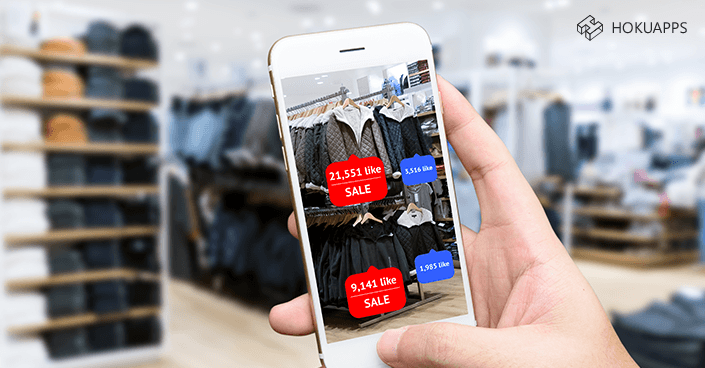
There is a huge opportunity waiting to happen with the advent of digital transformation, especially with the retail industry. However, in today’s retail business scenarios digitally-adept businesses are disrupting non-digitized businesses across the world.
In fact, a retail giant has progressed from being a USD $30.8 billion company to being worth a whopping $483 billion in just 10 years. A New York Post article tells us that 35 apparel business groups worth $110.6 billion are now worth just $135.9 billion. Basically, SMBs have lost a large share of their customers to retail giants.
What retail businesses today need is a well-thought-out investment plan to help businesses grow operationally, generate savings and create new relationships with new and existing customers. Thus, now is the time to integrate enterprise solutions and pull far ahead of your competitors.
Here are 7 ways enterprise solutions can positively affect your retail business:
The most important factor for any retail business is that the customer decides its fate. The biggest challenge for any business is to understand its customers’ needs and to serve them successfully.
With e-commerce taking over through digital channels like online shopping and mobile apps, retail businesses need information from newer sources to produce context-driven analytics. Analysis like demographics, dwell times, browsing patterns and shopping lifecycles help decision-makers to understand customer needs. This way you can provide your customers with an attractive customer experience, provide offers and promotions and increase savings.
Coming to physical stores, real-time analytics can be obtained through cameras and sensors to examine customer and staff interactions, customer heatmaps, category wise conversions and specific paths to purchases. In addition, technology can predict spikes at checkout times, creating situations for optimization of checkout facilities.
Combine all in-store analysis with online analysis and you can chart definite customer cycles in any season, at any given point in time.
Research on enterprise solutions tell us that to meet high expectations of customers, companies need to digitize their processes holistically. Both in-store and online transformation can streamline operations, which allows management to free resources and company executives who can then concentrate on core objectives. In doing so, businesses can free a considerable amount of capital which could be rerouted for investment back into the business.
Re-calibrating your retail supply chain can improve productivity and efficiency in warehousing operations (rework warehouse layout), automate resupply of stock, optimize the timing of key deliveries, reduce the need for stock checks (in-stores and warehouse). Added benefits include improved communication and collaboration with suppliers.
Retail businesses can also use Wi-Fi data to track forklifts movement and handheld scanners to improve on bottlenecks and improve safety in warehouses.
Unfortunately, with advance technology developments come risks of cyber-attacks. Businesses hold high-value information like credit card data, customer’s personal data, and buyer behavior data. Hence, making security a sensitive subject for businesses and customers alike.
Traditional defense mechanisms rely on inadequate protection which may not save businesses from being targeted by advanced malware attacks on websites, mobile devices, browsers, social media and point-of-sales systems. Solutions require retailers to employ security on all verticals – from endpoints to the Cloud.
The safety of the customer is paramount, which also extends to your staff and inventory as well. This is a crucial compliance factor with PCI (Payment Card Industry) security regulations. In addition, IP-based security surveillance can reduce common overhead costs like that on security staff, through the use of CCTV systems.
With the hub and spoke model, security can be monitored from a central location rather than a store-by-store model. Video monitoring also prevents loss of inventory from store shelves and allows monitoring of staff to prevent suspicious activity.
Tools such as video conferencing, mobile collaboration, telecommunications and Bring-Your-Own-Device (BYOD) practices can improve collaboration among in-store staff and the headquarters, improve operations through a hub and spoke model. Included in this model is on-demand training, information on new product information, and availability of products in-stores. This reduces time not just for your employees, but also saves on customer’s time.
As the term dictates, connected advertising and marketing drives revenue using specifically targeted ad communications and offers with your customers. With advanced analytics at your fingertips, your retail business can reach out through various communication channels like online, apps via mobiles, and in-store offers. This way you can target prospective consumers through context-specific searches based on their online search data.
Different retailers will be on different stages of this ‘digital enterprise integration’ journey. Nevertheless, the stage itself is of little consequence as retailers can always improve on significant areas of their business. The idea is to build a solid foundation to leverage the enabling phase. The emphasis is set squarely on customers as your decisions depend exclusively on your ability to understand and adjust to their needs.
Many retail businesses across the world have jumped onto the digital enterprise bandwagon and are benefiting from this transformation. To transform your business to optimized levels, talk to our experts today.